-
About
About the Company
About
About the CompanyDigital Solutions
February 9, 2026
The Internet has made it possible for even small and medium enterprises (SMEs) to expand their clientele and teams to various locations around the world. Small businesses operating in locations where the minimum wage is quite high, such as Geneva, Amsterdam, London, Canberra, Berlin, and Paris, can find hiring staff locally to be more expensive than what they could potentially earn. Without the internet, they might not be able to outsource their operations or hire freelancers, leading to either burning out their own employees or eventually closing the business.
It’s not just the SMEs that depend on the Internet. Even multinational businesses heavily rely on the internet to ensure that their entire business operations, from product development to after-sales services, are running smoothly.
However, because of the solutions that the internet offers to businesses, there are also lots of risks. Worse, these cyber threats and phishing attacks become even more complex as regulations become stricter. For businesses, whether they are SMEs or conglomerates, a single lapse in security can cause them irreparable damage. This is why every single business must have safer internet practices.
As a business process outsourcing provider that has been advocating digital security since our foundation ten years ago, we’ll talk about the foundations of Safer Internet Practices, and why you should adhere to them:
Because of the efficiency that online systems provide, companies nowadays no longer waste tons of paper to handle data, including the data of their clients, partners, employees, and operations.
However, despite a potential data breach that may expose their sensitive data to cybercriminals, businesses must remain “paperless” for efficiency and sustainability. This is where the involvement of all stakeholders in implementing safer internet practices comes in. Everyone should be knowledgeable about the use of encrypted communications, how to keep cloud platforms secure, and other essential Information Security Management System (ISMS) protocols.
Multinational businesses must be knowledgeable to comply with various data privacy and cybersecurity regulations, such as the GDPR (European Union), CCPA (California, USA), ISO/IEC 27001 standards, and local data privacy laws in the Asia-Pacific and other regions.
Failure to comply with any of these can lead to heavy fines, legal disputes, and restrictions in business operations. Safer internet practices, such as controlled data access, secure data storage, and employee cybersecurity training, are essential in meeting regulatory requirements and avoiding compliance risks.
Ransomware, phishing, and Distributed Denial of Service (DDoS) attacks are the most common cyberattacks that not only cause business disruptions but can also lead to failure. The effects may lead to downtime in just one region, but they may also lead to the disruption of global operations or the loss of customer trust.
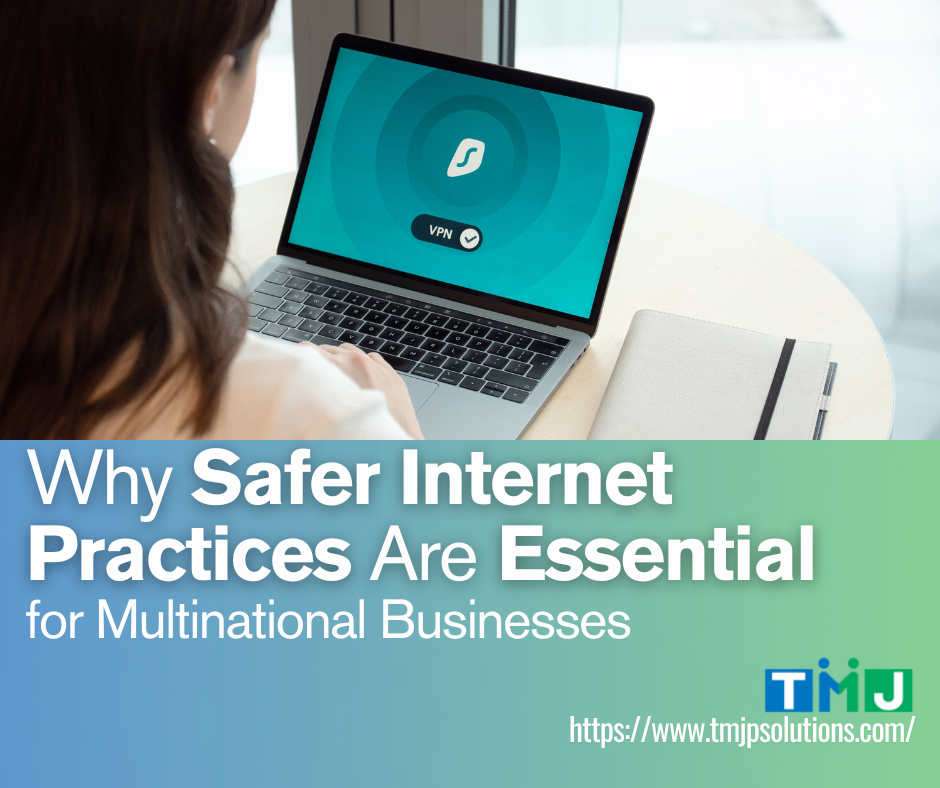
Through safer internet practices such as regular software updates, patch management, secure VPNs, and employee awareness training on phishing, social engineering, and how they should respond to incidents, businesses can maintain continuity even in the face of many cyber threats.
Trust is a key competitive advantage in the global market. Customers are more likely to engage with companies with strong cybersecurity and data privacy practices.
With almost everyone from almost anywhere on the planet being connected through social media, a single data breach can damage a brand’s reputation worldwide. By prioritizing safer internet practices, businesses can position themselves as reliable, responsible, and customer-centric.
The rise of remote work and global outsourcing has increased reliance on digital tools for communication and collaboration. While these tools improve efficiency, they also pose security risks if not properly managed.
Safer internet practices, including ensuring that collaboration platforms are secured through access controls and endpoint security, enable global teams to work productively without compromising security. This is especially important for businesses that operate multinationally, outsource customer support, have back-office operations, and provide IT services.
Digital transformation is a priority for multinational businesses, from AI-driven customer service to cloud-based enterprise systems. However, innovation without security can create vulnerabilities.
By integrating cybersecurity and safer internet practices into digital strategies, businesses can innovate with confidence.
At TMJP BPO Services Inc., we understand that cybersecurity and data privacy are essential for multinational organizations. As an ISO/IEC 27001-certified company, we implement strict data protection protocols, secure communication systems, and employee training programs to ensure the highest level of information security.
All of our teams are trained to handle sensitive information responsibly, helping global companies maintain compliance, security, and trust.
We understand that for multinational businesses, safer internet practices are not just an IT concern. They are a strategic business priority. Protecting data, ensuring regulatory compliance, preventing cyber threats, and maintaining customer trust are essential for sustainable global operations.
By investing in cybersecurity measures and partnering with trusted service providers like us, multinational companies can confidently navigate the digital landscape and focus on global growth.