-
About
About the Company
About
About the CompanyDigital Solutions
March 23, 2026
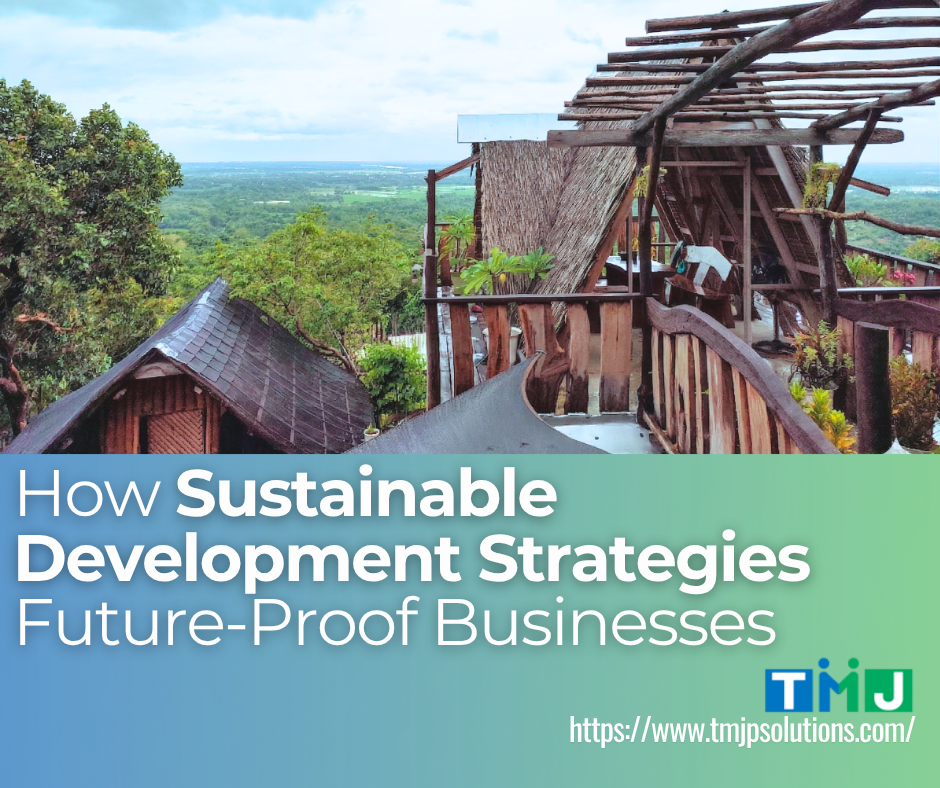
The world is continuously and rapidly changing due to technological advances. Along with these changes come shifting consumer expectations, economic crisis, and environmental concerns. These reasons alone are enough for businesses to realize that they can no longer afford to think short-term.
Sustainable development is no longer just a corporate social responsibility initiative. It has become a strategic necessity. Companies that integrate sustainability into their core operations are better positioned to adapt, compete, and thrive in the long run.
So, how exactly do sustainable development strategies future-proof businesses?
Future-proofing refers to a company’s ability to remain relevant, resilient, and competitive, whatever the condition the market is in. This includes adapting to:
Sustainable development strategies address these challenges by aligning business growth with long-term environmental, social, and economic stability.
Sustainable businesses are better prepared to handle disruptions. By optimizing resource use, reducing waste, and adopting energy-efficient systems, companies can lower operational risks and costs. These practices follow the virtues of Kaizen and Lean Six Sigma.
Some applications include diversifying supply chains to reduce dependency on a single source, investing in renewable energy to stabilize long-term expenses, and digitizing operations to minimize reliance on physical infrastructure.
These practices make businesses more agile in times of crisis, whether economic, environmental, or geopolitical.
Today’s consumers are more informed and value-driven than ever. They actively support brands that demonstrate ethical practices and social responsibility.
Sustainability initiatives such as transparent sourcing, fair labor practices, and eco-friendly packaging help build trust and strengthen customer relationships. Over time, this trust translates into brand loyalty, repeat business, and positive word-of-mouth, and they are the key drivers of long-term success.
Sustainability pushes companies to innovate. Whether it’s developing greener products, optimizing processes, or leveraging digital tools, businesses that embrace sustainable thinking often lead in innovation.
This proactive mindset allows companies to stay ahead of regulatory changes, tap into new markets, and differentiate themselves from competitors.
Innovation rooted in sustainability isn’t just good for the planet. It’s a powerful engine for growth.
Modern professionals, especially younger generations, want to work for organizations that align with their values. Companies with strong sustainability commitments are more attractive to purpose-driven employees. These also drive higher employee engagement, improved retention rates, and a stronger workplace culture.
A motivated workforce directly contributes to productivity, creativity, and long-term business stability.
One often overlooked yet highly effective sustainable development strategy is outsourcing.
By partnering with specialized service providers, businesses can operate more efficiently while reducing their environmental and operational footprint.
By integrating outsourcing into their sustainability strategy, businesses can remain agile, cost-effective, and environmentally conscious.
Sustainable practices often lead to cost savings over time. While some initiatives may require upfront investment, the long-term benefits include lower energy and operational costs, reduced regulatory risks, and increased investor confidence. More importantly, sustainability aligns businesses with global trends, making them more attractive to stakeholders and future-ready in an evolving economy.
And if you’re worried about the budget to take that next step, you can team up with a sustainability-ready outsourcing company.
Sustainable development shouldn’t just be an option for you. It is a cornerstone of modern business strategy. Companies that embed sustainability into their operations are not just protecting the environment. They are building resilient, adaptable, and future-ready organizations.
From optimizing resources and fostering innovation to leveraging outsourcing solutions, sustainable strategies empower businesses to navigate uncertainty with confidence.
Because in the end, future-proofing isn’t about predicting what comes next. It’s about being prepared for anything.