-
About
About the Company
About
About the CompanyNews & Events
September 30, 2026
Maintaining quality is not only about avoiding mistakes or controlling damages, especially for businesses operating in our highly competitive environment. It is about continuously examining how work is performed, identifying opportunities for improvement, and empowering people to create better ways of working.
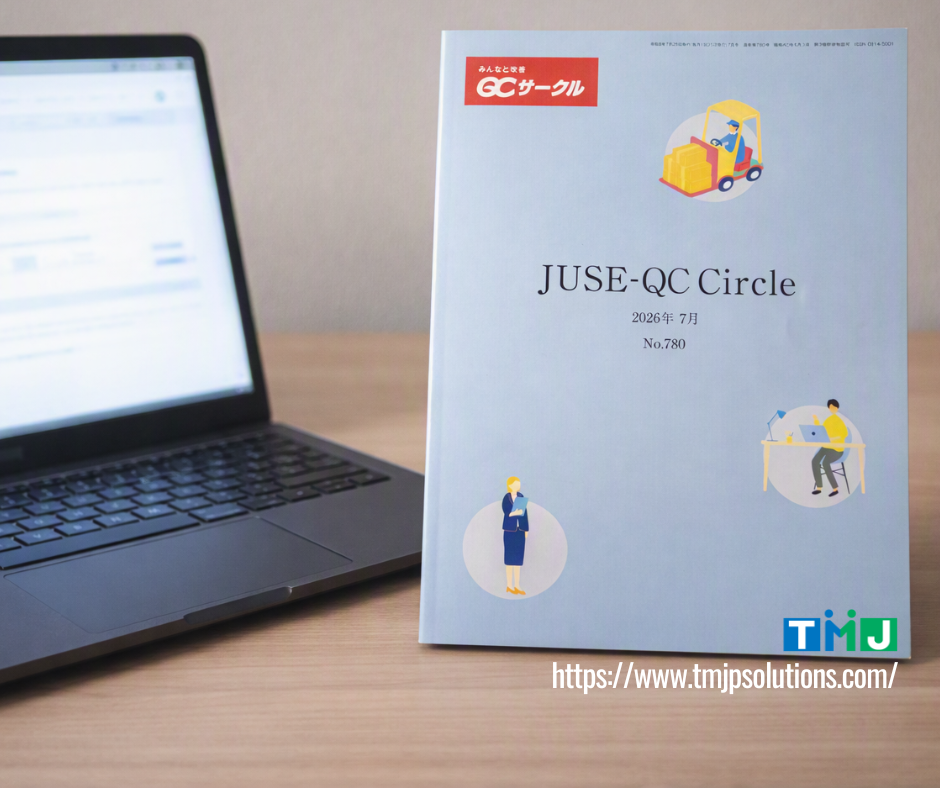
At TMJP BPO Services Inc., this philosophy is deeply connected to one of our core values: Kaizen, or continuous improvement, and this was featured on a double-page spread in the QCC July 2026 magazine by the Union of Japanese Scientists and Engineers (JUSE).
As a Philippine subsidiary of TMJ, headquartered in Japan, TMJP has developed its approach to quality management by combining Japanese quality principles with the knowledge, skills, and creativity of our teams in the Philippines. One of the ways we put this philosophy into practice is through our QC Circle activities.
QC Circles bring employees together to identify operational challenges, analyze their causes, develop practical solutions, and measure the results. More importantly, they create an environment where improvement is not entirely dependent on management or specialized teams. It becomes a shared responsibility involving people who understand the work firsthand.
Through years of development, TMJP’s QC Circle activities have evolved from learning the fundamentals of quality-control methods to conducting improvement projects that generate measurable value for clients and can be shared with teams beyond the organization.

TMJP BPO Services Inc. supports a wide range of business operations, including back-office services, customer support, and IT- and data-related operations. As our clients’ businesses grow and their requirements change, maintaining consistent quality while remaining flexible is essential.
To support this objective, TMJP has established an operational system based on the quality standards and practices of our parent company in Japan. At the same time, our teams in the Philippines contribute their own expertise and perspectives to improve the way these standards are applied in actual operations.
The development of our QC Circle activities has been an important part of this process.
TMJP’s QC Circle Manager joined the company as a regular employee the year after TMJP established its Philippine operations in 2015.
From the beginning of his career at TMJP, he mentioned that he was strongly inspired by the company’s core value of Kaizen. Drawing on the knowledge and experience he had gained in his previous career, he began working on process improvement initiatives within the newly established Philippine operations, with support and cooperation from colleagues at TMJ in Japan.
This early focus on improvement eventually became the foundation for a broader company-wide approach to quality and operational excellence.
A significant milestone came in 2016, when TMJP participated for the first time in a training event on QC tools and QC methods organized by the Quality and Productivity Association of the Philippines (QPAP).
While the training was primarily designed for participants from the manufacturing industry, for a BPO organization like TMJP, this presented both a challenge and an opportunity.
Even though the nature of BPO operations differs considerably from manufacturing, the fundamental principles of identifying problems, understanding their causes, developing countermeasures, and measuring results can be applied across industries.
The training allowed TMJP to learn from an industry with a different operational perspective. We reconceptualized lessons from manufacturing to apply them to optimize BPO processes and then began developing our own internal improvement education program.
This is how it became an important foundation for TMJP’s QC Circle activities.
The following year, in 2017, TMJP launched company-wide improvement activities and held the 1st TMJP Improvement Convention; the winning QC Circle was then invited to participate in the company-wide convention organized by our parent company in Japan.
In the early stages, TMJP participated through a special presentation. Over time, our QC Circles continued to develop their skills and experience. Today, they have reached a level where they participate alongside QC Circles from Japan, demonstrating how quality-improvement practices can develop within a Philippine BPO environment.
For TMJP, these activities not only contribute to strengthening our relationship with clients and business partners by demonstrating our commitment to continuous improvement and sustainable service quality. The highlight was not our own projects. The focus was to encourage an exchange of ideas around Japanese quality management, frontline-led improvement, and people development.
Kaizen, or continuous improvement, becomes even more valuable when organizations are willing to learn from one another. By sharing experiences, organizations can discover new perspectives that may not emerge when they look only within their own industry.
In September 2024, TMJP organized an initiative to share improvement activities with Japanese-affiliated companies from other industries.
Although participating companies operated in different industries, they encountered many common business challenges: improving processes, developing employees, reducing inefficiencies, and creating sustainable value for customers.
The exchange demonstrated an important characteristic of Kaizen: improvement principles can cross industries because they begin with people and the way they approach problems.
One example of how TMJP’s QC Circle approach has translated into practical operational improvements is the project conducted by our Web Development FAQ Creation Team.
Project: TMJP Web Development FAQ Creation Operations
QC Circle: SAIKURU
Theme: Improving the Efficiency of Performance Monitoring
Members: 7 members — 1 Supervisor and 6 Operators
Activity Period: June 2023 – February 2024
Project History: Third improvement project undertaken by the circle
The team manages web content used for both internal and external purposes while supporting a wide range of customer-related operations.
Because the team handles multiple activities and responsibilities, maintaining visibility into performance is essential. The team therefore placed strong emphasis on KPI-based management and the accurate visualization of operational performance.
The QC Circle project focused on improving the efficiency of performance monitoring and creating a more effective way to understand the team’s workload and progress.
The SAIKURU team began by organizing and examining its existing work processes.
Through brainstorming and Why-Why Analysis, the members explored the challenges they were experiencing and examined the underlying reasons behind them rather than focusing only on the visible problems.
They subsequently used tools such as a Problem Matrix and Cause-and-Effect Diagram to identify areas that required improvement.
This analysis reinforced an important realization: accurately measuring work hours and efficiently managing tasks were critical to improving the team’s overall operational visibility.
The challenge was therefore not simply about working faster. The team needed a way to obtain reliable information about how work was progressing, how much time activities required, and where resources were being used.
Instead of relying solely on existing tools or adopting an external solution, the team considered how its own knowledge and technical capabilities could be used to address the problem.
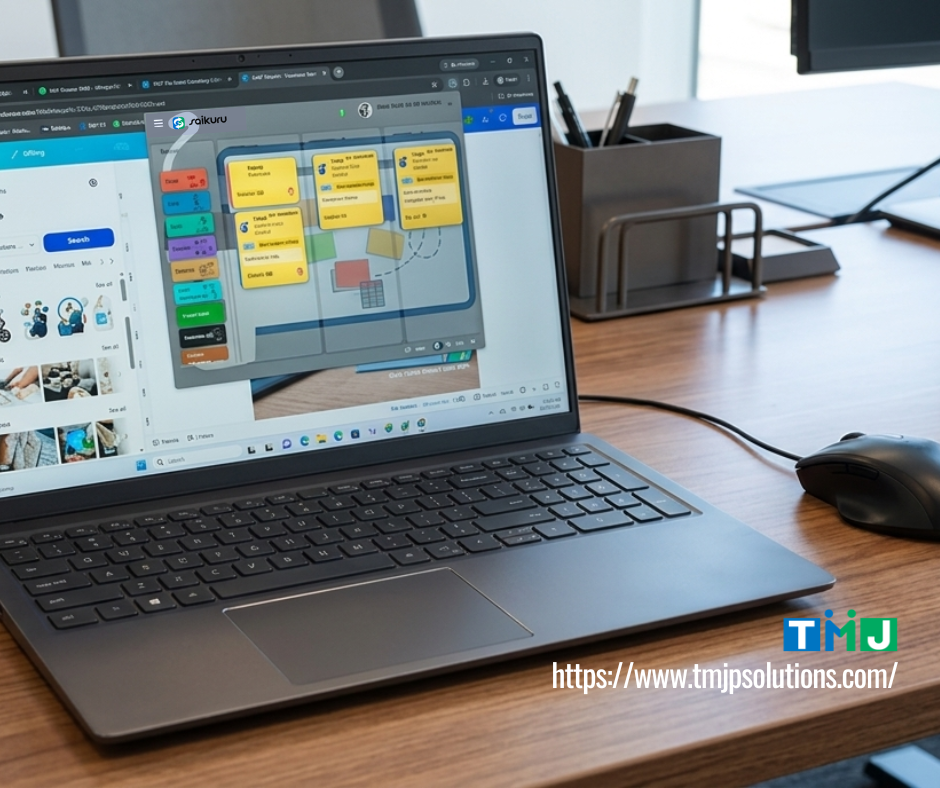
This led to the development of a task-management tool created by the team itself: SAIKURU.
The SAIKURU tool was designed to address several operational needs in one system.
It provides:
By bringing these functions together, SAIKURU gave the team access to more accurate and timely operational data.
This is one of the strengths of a QC Circle approach. Rather than treating improvement as a theoretical exercise, employees examine the realities of their own work and develop solutions that respond directly to those realities.
The solution also demonstrated how technical skills and process-improvement thinking can complement one another.
The team did not simply identify a problem. It analyzed the causes, considered possible countermeasures, and used its existing expertise to create a practical solution.
Following the implementation of SAIKURU, the team experienced several improvements.
Work status became easier to visualize, reporting became faster, and collaboration among team members became stronger. The system also increased awareness of time management and provided more accurate data for understanding operational performance.
These improvements created value beyond the immediate project.
The results were highly valued by the client, contributing to additional project opportunities, including spot assignments. The tool’s usefulness also led to its expansion to other internal operations, including translation activities.
In this way, a QC Circle project that began as an effort to improve performance monitoring became a source of broader operational value.
It illustrates how a relatively focused improvement initiative can generate benefits that extend beyond the original scope when the solution is practical, measurable, and adaptable.
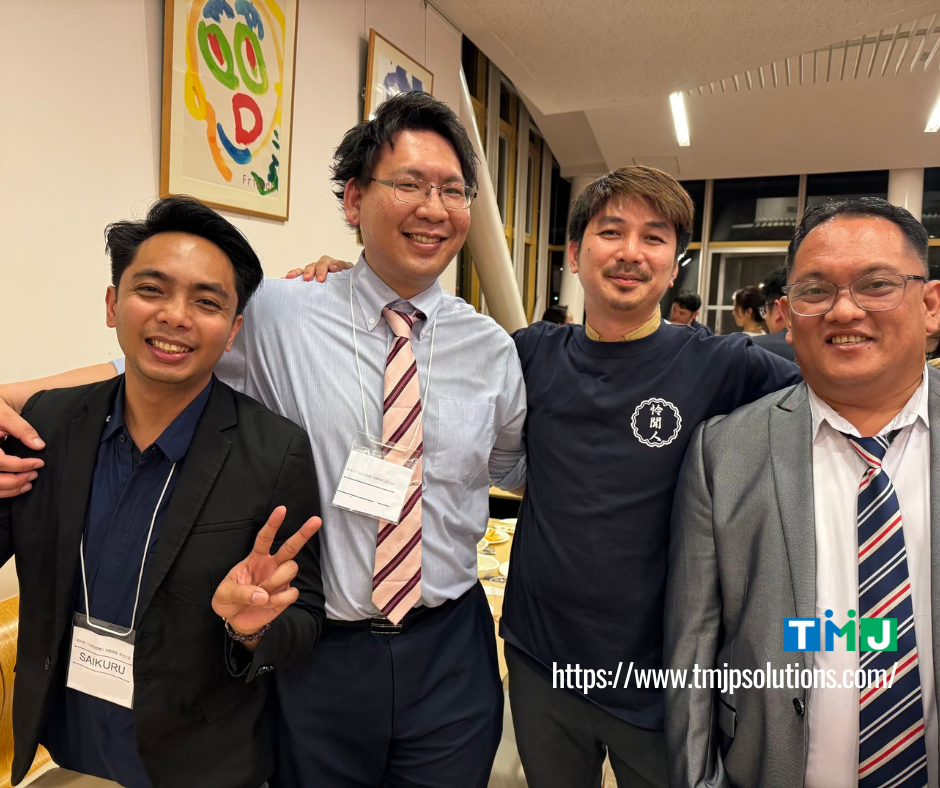
While tools, data, and analytical methods are important components of QC Circle activities, the foundation remains the people who perform the work.
One of the key lessons from the SAIKURU project came from a member of the QC Circle. He emphasized that improvement can produce greater results when it is approached as a team effort rather than as an individual’s responsibility.
By bringing together the strengths, knowledge, and perspectives of different members, the team was able to approach challenges from multiple angles and work collectively toward a solution.
This reflects an important principle behind Kaizen: small improvements become more powerful when people continuously work together to make them happen.
For employees, participating in QC Circle activities can also create opportunities to develop skills beyond their regular responsibilities. Team members learn to analyze problems, communicate ideas, interpret data, collaborate with colleagues, and evaluate the effectiveness of solutions.
These capabilities can contribute not only to better processes but also to stronger professional development.
TMJP’s QC Circle activities have grown significantly since the company first began learning QC tools and methods in 2016.
What started as an effort to adapt quality-management practices to a Philippine BPO environment has developed into a continuing culture of employee-led improvement. From the first TMJP Improvement Convention in 2017 to collaboration and knowledge-sharing with Japanese-affiliated companies in 2024, our journey has continued to evolve.
The SAIKURU project is one example of what this approach can achieve: identifying an operational challenge, analyzing its causes, developing a solution using internal expertise, measuring the results, and extending the benefits beyond the original project.
For TMJP, Japanese quality does not mean simply copying a process developed elsewhere. It means embracing the principles behind continuous improvement and applying them thoughtfully within our own environment.
By combining Japanese quality-management practices with the expertise and initiative of our Philippine teams, we continue to build an organization where improvement is part of everyday work.
Kaizen is not a one-time project. It is an ongoing journey.
And at TMJP, that journey continues through every employee, every QC Circle, and every opportunity to make the way we work better.